
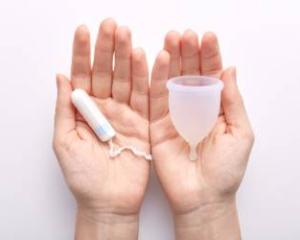
Menstrual Cups vs. Disposable Products: Which Is the Better Choice for You?
Reviewed by Dr. Kenneth Barron
Picking a menstrual product sounds easy at first, but once you try a few options, you quickly realize it’s actually pretty personal. What works great for one person might feel totally off for someone else, and it really comes down to comfort, routine, and how your body responds.
Most people eventually land on either menstrual cups or disposable products like pads and tampons. Both do the job, but they fit into everyday life in very different ways.
It’s also worth paying attention to your cycle itself. If your periods suddenly feel heavier, more painful, or just harder to deal with than usual, it might not be just a product issue. The Center for Advanced Gynecology helps patients explore concerns such as heavy menstrual bleeding, painful periods, and irregular cycles when something feels off.
Understanding Menstrual Cups and Disposable Menstrual Products
What Are Menstrual Cups?
Menstrual cups are small, reusable cups or discs composed of medical-grade silicone. Instead of absorbing blood like a pad or tampon, they collect it. They sit inside the vaginal canal and can usually stay in place for several hours before needing to be emptied.
In real life, that usually looks like:
- Using the same cup for years
- Emptying, rinsing, and reinserting it during your cycle
- Not needing to buy products every month
- Eventually getting to a point where you barely think about it during the day
A lot of people are surprised by how convenient they become once they get used to them.
What Are Disposable Menstrual Products?
These are your pads and tampons, designed for single use.
Basically:
- Pads sit externally and absorb flow
- Tampons go inside and absorb internally
- You change them throughout the day
- They are easy to find pretty much everywhere
For many people, this option just feels familiar, which makes it easier to stick with.
Comfort, Convenience, and Day-to-Day Use
Menstrual Cups
This is usually where people hesitate a bit at first. There’s definitely a learning curve. The first few tries can feel awkward, and it might take a cycle or two to really get comfortable with it.
But once it clicks, people often like that:
- Fewer changes during the day
- Can wear while swimming
- Higher capacity compared to many tampons
- Easier for workouts, swimming, or long days out
- More comfortable overnight once you’re used to it
- Much better from an environmental perspective
Many users also like not having to constantly carry spare products.
Disposable Products
Pads and tampons stay popular for a reason: they’re simple.
- Pads are straightforward and beginner-friendly
- Tampons are quick once you get the hang of them
- No cleaning or upkeep needed
- Easy to replace anytime during the day
- It's usually what your mother or sisters have used
Sometimes, simple really is what people need, and that’s completely valid.
Cost Differences Between Menstrual Cups and Disposable Products
Over time, the cost difference becomes pretty noticeable.
Menstrual Cups
- Higher upfront cost
- Can last for years
- Usually cheaper in the long run
Disposable Products
- Lower initial cost
- Monthly repurchases add up
- Ongoing expense every cycle
If saving money in the long term is a priority, cups usually come out ahead.
Environmental Impact of Menstrual Products
This is another area where the difference is pretty clear.
Menstrual cups are reusable, so there’s very little waste involved. You’re not throwing something away every month, and over time, that really makes a difference. Most people who switch to cups like that are not constantly contributing to monthly waste.
Disposable products, on the other hand, are single-use. That means more packaging, more landfill waste, and more constant production behind the scenes. It just keeps repeating every cycle. Not to mention that petroleum products (petrochemicals) are involved in making most pads and tampons to make them super absorbent and are thus non-biodegradable (500-800 years).
Some people choose menstrual cups for environmental concerns, whereas others opt for the convenience of disposables.
Health and Safety Considerations
When used correctly, both approaches are generally safe, but each person's experience varies.
Menstrual Cups
- Usually produced without perfumes or harsh chemicals
- Requires regular cleaning
- Can feel a little tricky at first if positioning is incorrect
- Some persons experience less dryness compared to tampons
Disposable Products
- Tampons provide a slight risk of Toxic Shock Syndrome if kept in for too long
- Certain items may aggravate delicate skin
- Long-term use of pads may cause them to feel bulky
Managing Heavy Flow With Menstrual Cups or Disposable Products
If your flow is heavy, this is where things can feel noticeably different.
Menstrual cups can hold more fluid than many pads or tampons, which is why some people with heavier periods prefer them. That said, on very heavy days, they may still need more frequent emptying than expected.
Disposable products can feel easier in those moments because you can just change them quickly without much thought.
Heavy menstrual bleeding can sometimes be linked to things like:
- Hormonal imbalance
- Fibroids
- PCOS
- Endometriosis
- Adenomyosis
And sometimes it really is more than just the product you’re using. If your periods consistently feel overwhelming or difficult to manage, it might be worth getting checked. The Center for Advanced Gynecology can help determine what’s going on and discuss treatment options based on your situation.
Choosing the Right Product for Your Lifestyle
At the end of the day, this really comes down to what fits into your actual routine.
Menstrual cups are low-waste, long-lasting, and practical once you've gotten used to them and if you haven’t considered it, we would advise you do!
Menstrual cups may work well for:
- People seeking for a long-term solution
- Those who are familiar with internal products
- Active lifestyle or frequent travel
- Anyone looking to decrease waste and continuing costs
Disposable products may be effective For:
- New or younger users
- Individuals who prefer external protection, such as pads
- Those with pain while trying to insert a cup (such as those with vulvodynia)
- Anyone who is uncomfortable with internal products
There is no single, perfect solution here. It all comes down to what feels comfortable on your body and fits into your everyday schedule.
When to See a Gynecologist About Your Period
If your period feels unusually heavy, painful, or just harder to manage than usual, it might be worth getting it checked out. A few things to look out for include:
- Periods lasting more than seven days
- Bleeding through pads or tampons pretty quickly
- Large blood clots
- Strong cramping or pelvic pain
- Feeling unusually tired or lightheaded during your cycle
Sometimes these can point to heavy menstrual bleeding or another underlying condition.
In some cases, the Center for Advanced Gynecology can help figure out what’s going on and guide you toward treatment options that actually make sense for your situation.
At the end of the day, choosing between a menstrual cup and disposable products really comes down to what fits your body and lifestyle. Menstrual cups can save you money in the long term, decrease waste, and handle heavy flows rather well once you get used to them. Disposables, on the other hand, are what most people are used to, so they feel more familiar, simpler, and easier to use without much thought.
If your periods are consistently uncomfortable, especially if they’re heavy or hard to deal with, it might be worth looking a bit deeper than just switching products. The Center for Advanced Gynecology can help you figure out what’s going on and talk through treatment options that actually make a difference.