
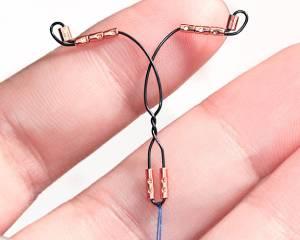
A New Option for Contraception: Introducing the Latest Copper IUD
Reviewed by Erica Stephenson, WHNP-BC
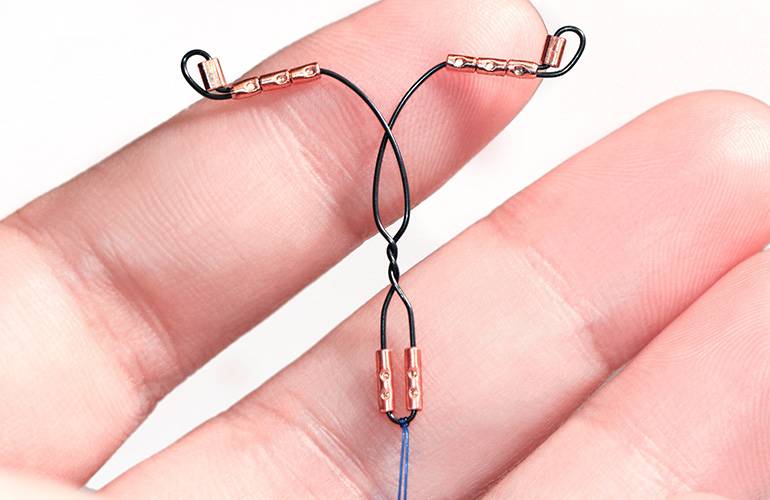
In February 2025 the FDA approved Miudella, the first new hormone-free copper IUD available in the United States in more than 40 years. It’s smaller and more flexible than Paragard, contains less than half the copper, and is approved for three years of use rather than ten. For anyone who wants effective birth control without hormones, that means there are now two copper options rather than one. They suit different people.
Miudella vs. Paragard at a glance
| Miudella | Paragard | |
| FDA approved | February 2025 | 1984 |
| Duration of use | 3 years | 10 years* |
| Copper content | 175 mm² | 380 mm² |
| Frame | Nitinol - superelastic alloy | Polyethylene |
| Size | 32 mm x 30 mm | 32 mm x 36 mm |
| Hormones | None | None |
| Effectiveness | Over 99% | Over 99% |
| Emergency contraception | Not indicated | Up to 5 days after sex |
| Return to fertility | Immediate | Immediate |
*A WHO study showed that the Paragard remains highly effective up to 12 years after insertion. WHO Special Programme of Research, Development and Research Training in Human Reproduction, Task Force on the Safety and Efficacy of Fertility Regulating Methods, The TCu 380A, TCu220C, Multiload 250, and Nova T IUDs at 3, 5 and 7 years of use. Contraception. 1990;42:141.
The headline difference is copper dose and frame design. Miudella positions a smaller amount of copper more strategically on a flexible nitinol frame, which is what allows it to remain highly effective at a lower dose. Because heavier bleeding and cramping are the most common reasons people stop using a copper IUD, and because those effects are related to copper exposure, a lower-dose device is a meaningful development.
The trade-off is duration. Three years versus ten is a substantial gap, and for someone who wants to make one decision and not revisit it for a decade, Paragard still offers something Miudella doesn’t.
How the Copper IUD Works for Contraception
A copper IUD is a small T-shaped device placed inside the uterus. It contains no hormones at all. Instead, it releases small amounts of copper ions, which change the environment inside the uterus in ways that prevent fertilization:
- Copper ions impair sperm motility, slowing sperm down and reducing their ability to move
- Sperm are far less likely to reach an egg
- The uterine environment becomes inhospitable to fertilization
Once the IUD is placed, there’s nothing to do day-to-day. No pills, no reminders, no routine maintenance. It’s this “set it and forget it” quality that makes long-acting reversible contraception appealing to so many people.
Both copper IUDs are over 99% effective, which puts them in the same efficacy tier as sterilization and ahead of every method that depends on remembering to do something.
Copper IUD vs. Hormonal IUD
This is the choice most people are actually considering, and it isn’t really about effectiveness. Both types are over 99% effective. It’s about how each one affects your periods and the rest of your body.
| Copper IUD | Hormonal IUD | |
| Devices | Paragard, Miudella | Mirena, Kyleena, Liletta, Skyla |
| Hormones | None | Levonorgestrel, released locally within the uterus |
| Effect on periods | Often heavier, especially first 6-12 months ba | Lighter; many stop having periods |
| Helps heavy bleeding? | No | Yes |
| Duration | 3 yrs (Miudella) · 10 yrs (Paragard) | 3–8 yrs, depending on device |
| Emergency contraception | Paragard: yes | Yes* |
*Based on published studies, not FDA approved
Choose copper if you want to avoid hormones entirely, whether by preference or because of a medical reason, and your periods are currently manageable.
Choose hormonal if your periods are already heavy or painful. A levonorgestrel IUD is one of the most effective treatments available for heavy menstrual bleeding, and a copper IUD will generally make heavy bleeding worse rather than better.
That's the crux of it. Neither is better; they simply solve different problems.
Is a copper IUD right for you?
A copper IUD tends to work well if you:
- Want or need contraception with no hormones at all
- Want long-term protection that’s still fully reversible
- Don’t want to remember something daily, weekly, or monthly
- Are breastfeeding (though other options are still available)
- Want protection that starts immediately
It may not be the right fit if you:
- Already have heavy or painful periods. A copper IUD typically makes both worse.
- Have anemia or low iron stores
- Have a uterine abnormality that distorts the cavity, such as certain fibroids
- Have unexplained abnormal vaginal bleeding that hasn’t been evaluated
- Have an active pelvic infection
- Have Wilson’s disease or a known copper allergy
Insertion: What to Expect, including about Pain
This is the part people are most worried about and it's often glossed over.
IUD insertion can hurt. Experience varies enormously. Some people describe tolerable period-like cramping for under a minute, while others find it genuinely very painful. Being told in advance that it's "just a pinch" and then finding otherwise is a large part of why patients have pushed back publicly on how this procedure has been handled.
In 2024 the CDC updated its contraceptive practice recommendations to say clinicians should counsel patients on pain management options before IUD placement, rather than treating discomfort as something to be endured. That's a meaningful change and it's worth knowing you're entitled to that conversation.
Options worth asking about:
- An NSAID such as ibuprofen or naproxen taken beforehand
- Topical lidocaine applied to the cervix
- A paracervical block: injected local anesthetic around the cervix
- Anti-anxiety medication
- Cervical softening medication before the procedure in selected cases
The procedure itself:
- A consultation and exam first, to check the position and size of your uterus
- A speculum is placed, and the cervix is cleaned
- The IUD is passed through the cervical canal into the uterus
- The strings are trimmed so they sit 2-3 cm past the cervix
- The placement itself typically takes only a few minutes
Afterward, cramping and spotting for a few days is normal, and irregular spotting can continue for several weeks.
Most people go back to normal activity the same day. A heating pad and an NSAID help. Arranging not to have a demanding afternoon straight afterward is sensible, even though many people feel fine.
Protection starts immediately with a copper IUD. No backup method or waiting period is required.
Safety, Risks, and Side Effects
Copper IUDs are very safe. The risks are real but uncommon, and they're worth knowing.
Common, and usually temporary:
- Heavier, longer, or more painful periods. Most pronounced in the first 6-12 months and often improve after that
- Cramping and spotting after insertion
- Irregular spotting between periods for the first few months
Uncommon:
- Expulsion - the device partially or completely coming out, most likely in the first year. Checking that you can feel the strings periodically is how this is caught.
- Displacement - the device shifting from its correct position
Rare:
- Uterine perforation during placement, occurring in roughly 1 in 1,000 insertions (not a medical emergency)
- Pelvic infection, with a small increase in risk confined to the first 20 days after insertion, usually related to an infection already present at the time of placement
- Pregnancy while the IUD is in place, which is rare, but carries a higher chance of being ectopic and needs prompt evaluation
Contact us if you develop fever, severe or worsening pelvic pain, foul-smelling discharge, heavy bleeding, pain during sex that's new, or if you can no longer feel the strings.
One important limitation: an IUD does not protect against sexually transmitted infections. No IUD does, hormonal or copper. Condoms remain necessary for STI protection, and regular STI screening is worth building into your routine care regardless of contraceptive method.
Removal and Fertility Afterward
Removal is quicker and generally much easier than insertion. Your provider grasps the strings with a pair of forceps and the flexible arms fold as the device comes out. It usually takes seconds.
Fertility returns immediately. There's no washout period and no lasting effect on your ability to conceive.
Ovulation is unaffected throughout the duration of use, since a copper IUD never suppressed it in the first place. Pregnancy is possible in the first cycle after removal.
That reversibility is a large part of the appeal for people who aren't certain about their timeline. You can have years of highly effective contraception and then change course immediately.
Contraception Today: The Wider Picture
Contraception has genuinely improved, and the range of options now means the goal isn’t finding the “best” method. It’s finding the one that fits your body, your health history, and your life.
Long-acting reversible methods have become steadily more popular, largely because they remove the mental load. Once it’s placed, there’s nothing to remember and nothing to get wrong.
If you’re weighing options, contraception counseling and management is a conversation worth having properly rather than picking from a list. Your menstrual history, iron levels, plans for pregnancy, and previous experience with hormones all shape which method will best suit you. For patients whose contraceptive choice is entangled with another condition, such as PCOS/PMOS, endometriosis, or heavy bleeding, that conversation matters even more, because the right method can treat multiple problems at once.
Frequently Asked Questions
Is the Miudella IUD available now?
As of October 2026 Miudella is only available through a small number of practices. It is expected to be more widely available in 2027
Is a copper IUD covered by insurance?
Under the Affordable Care Act, most plans cover IUD placement and removal at no out-of-pocket cost, including the device, insertion visit, and follow-up. Coverage varies, so confirm with your plan. We also see self-pay patients and can quote a price in advance.
Can I use tampons or a menstrual cup with a copper IUD?
Tampons are fine. The IUD sits inside the uterus, well above the vaginal canal. Menstrual cups are not recommended because the suction could theoretically dislodge an IUD.
Can my partner feel the IUD strings?
Usually not. The strings soften and curl up behind the cervix within a few weeks. If they do cause discomfort during sex, they can be trimmed shorter at a quick office visit.
Can I get a copper IUD if I've never had children?
Yes. That's a myth left over from older, larger IUD designs. Modern IUDs are recommended for people who haven't been pregnant, including teenagers, though insertion can be slightly more uncomfortable when the cervix hasn't dilated before (like during labor).
Can a copper IUD be placed after childbirth or a miscarriage?
Yes. Immediately after a delivery or pregnancy loss, or at the postpartum visit. Immediate placement is convenient but carries a somewhat higher chance of expulsion, so we'll talk through the timing that suits you.
Does a copper IUD cause weight gain or affect libido?
No. A copper IUD contains no hormones at all, and your natural cycle continues unchanged.
Is a copper IUD safe during an MRI or going through airport security?
Both are fine. Copper IUDs are non-magnetic and MRI-safe, and airport scanners won't detect one. Mention it to the radiographer before an MRI, as you would any implanted device.
What if I want it removed early?
Any time, for any reason. You don't need to justify the decision. Being approved for three years or ten doesn't commit you to that.