For information about your new Patient Portal, please visit https://www.myprivia.com/north-texas-portal.
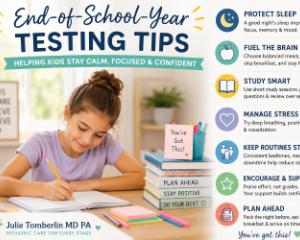
End-of-School-Year Testing Tips for Kids & Teens
How to Reduce Stress, Boost Focus, and Finish Strong
As the school year wraps up, many students face final exams, standardized tests, and end-of-year assessments. This time can feel overwhelming—for kids and parents alike. At Julie Tomberlin MD PA, Julie Tomberlin MD and her excellent nurse practitioners support families through every season of childhood, including the busy testing weeks.
Here are practical, pediatrician-approved testing tips to help your child feel calm, confident, and prepared.
1) Protect Sleep—It’s the #1 Performance Booster
Sleep is the single most powerful tool for memory, focus, and mood.
What to aim for:
- Elementary: 9–12 hours/night
- Teens: 8–10 hours/night
Simple wins:
- Keep bedtime within 30–60 minutes of normal
- Power down screens 1 hour before bed
- Keep mornings consistent (even on weekends)
2) Fuel the Brain with Balanced Nutrition
Stable blood sugar = better concentration. Before a test:
- Include protein + complex carbs + healthy fat
- Examples: eggs + toast, yogurt + berries, peanut butter + banana
Avoid:
- Skipping breakfast
- High-sugar foods that lead to crashes
Hydration matters:
- Mild dehydration can affect attention—send a water bottle to school
3) Create a Calm Study Plan (Not Cramming)
Last-minute cramming increases stress and reduces retention.
Try this instead:
- Break studying into short, focused blocks (20–30 minutes)
- Use practice questions or flashcards
- Review a little each day leading up to tests
4) Manage Test Anxiety with Simple Tools
A little nervousness is normal—but too much can interfere with performance.
Teach your child:
- Slow breathing (inhale 4, exhale 6)
- Positive self-talk (“I’m prepared, I can do this”)
- Visualization (imagine walking into the test calmly)
5) Keep Routines Steady
During testing weeks, consistency helps kids feel secure.
- Maintain regular mealtimes and bedtimes
- Limit schedule overload when possible
- Build in downtime after school
6) Support Without Adding Pressure
Kids often feel internal pressure—try not to add more.
Helpful phrases:
- “I’m proud of your effort.”
- “Just do your best.”
- “We’ll get through this together.”
Avoid:
- Overemphasizing grades
- Comparing to peers
7) Watch for Burnout
Signs your child may be overwhelmed:
- Irritability or mood swings
- Trouble sleeping
- Headaches or stomachaches
If you notice these, scale back, prioritize rest, and offer support.
8) Plan Ahead for Success
- Pack materials the night before
- Eat a good breakfast
- Arrive on time and calm
When to Reach Out for Help
If your child has:
- Significant test anxiety
- Difficulty focusing
- Ongoing sleep or mood concerns
Our team at Julie Tomberlin MD PA can help support your child’s physical and emotional health during school stress.
We’re Here for Your Family
At Julie Tomberlin MD PA, Julie Tomberlin MD and her excellent nurse practitioners are proud to serve as your trusted Mansfield pediatrician, helping your child stay healthy, confident, and ready to succeed—during testing season and beyond.
Call or text us today to schedule a visit: 682-518-811
Final Thought
End-of-year testing doesn’t have to feel overwhelming. With the right support, routines, and mindset, your child can finish the school year strong, confident, and healthy.