

4 Tips to Adjust to the Fall Time Change

The clocks go back an hour on November 1st. The time change affects nearly everyone in the United States. While twice-yearly clock changes can feel inconvenient, the good news is that the fall time change is more aligned with our biological clock and circadian rhythm, making it generally easier on our bodies than the spring time change (to Daylight Saving time). With November 1st fast approaching, we’re sharing useful tips for adjusting to the fall time change and taking advantage of your extra hour rather than giving it away.

1. Duration and Consistency of Sleep
One of the best ways to improve sleep quality year-round, especially during clock changes, is to focus on duration and consistency of sleep. Think of the fall time change as an opportunity to reset your sleep schedule.
Make sure you get at least 7 hours of sleep per night, and try to keep a consistent sleep-wake schedule. This means going to sleep at the same time every night and getting out of bed at the same time every morning.
2. Adjust Timing of Daily Routines
If you know time changes are difficult for you, you can start preparing a few days ahead of time. Adjust the timing of daily routines that serve as time cues for the body, such as your mealtimes or exercise schedule, by shifting them a little later in the days leading up to the time change. You can gradually move your bedtime, wake time, meals, and exercise about 15 to 30 minutes later each day. You do not need to shift everything by a full hour at once.
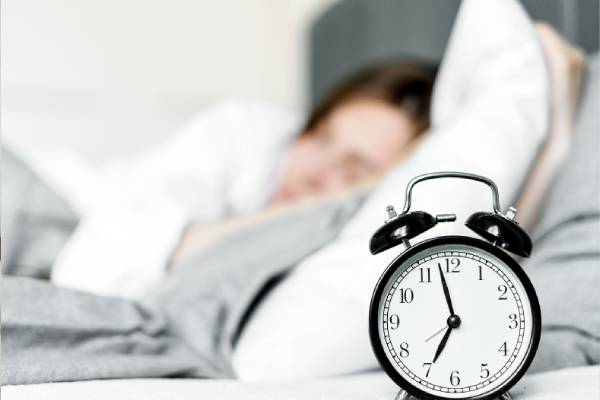
3. Wait Until Bedtime to Change Your Clocks
Go to bed at your usual time, set your clocks back one hour before going to sleep, then wake up at your usual wake time. This allows you to take full advantage of that extra hour of sleep.

4. Go Outside
Our internal biological clock does not immediately reset just because the clock on the wall changes. Circadian rhythm is largely regulated by light, along with our regular sleep, meal, and activity schedules, so when we move the clock back an hour, our body may initially feel like it’s waking up or getting sleepy at slightly different times than the clock says.
Morning light is one of the strongest signals we have for synchronizing our internal clock and circadian rhythm. Head outside in the morning to get some sunlight during the week after the time change to help regulate sleep and alertness. If you can’t get outside, a bright light box can also be helpful. We recommend using something about 10,000 Lux for about 15 to 20 minutes within half an hour of waking up.
Paying attention to lighting in the evening can also help your biological clock adjust. At night, keep things dimmer and reduce bright light, particularly from phones, tablets, and televisions during the hour or two before bed.
Is the fall time change really a big deal?
For most healthy adults, it’s a relatively small adjustment. You may wake up a little earlier than usual, feel sleepy earlier in the evening, or experience some temporary disruption in your sleep. These problems often resolve within a few days.
Anyone who already has difficulty sleeping or maintaining a regular sleep schedule may notice the transition more, including people with insomnia, delayed sleep schedules, shift workers, and people with very irregular sleep schedules. Children and teenagers can also be particularly sensitive because their sleep schedules can be easily disrupted and many are not getting enough sleep. Older adults may also notice changes because sleep patterns and circadian rhythms can change with age.
If significant sleep problems persist well beyond the transition, it should not simply be blamed on the clock change. Consider talking to your provider about possible underlying conditions.
The PMA Sleep Medicine team is here to support you through this transition and beyond. Contact us today to book your next appointment.