
What to Expect: At Home Sleep Study
What Is a Home Sleep Study and What Should You Expect?
If your provider suspects sleep apnea, one of the first tests recommended may be a home sleep apnea test (HSAT or HST). This test allows you to evaluate your breathing during sleep from the comfort of your own home.
At PMA Health, home sleep studies are commonly used to diagnose Obstructive Sleep Apnea in patients who have symptoms such as snoring, excessive daytime sleepiness, morning headaches, or pauses in breathing during sleep.
A home sleep study involves wearing a small monitoring device overnight that records several physiologic signals while you sleep. The information collected helps your sleep physician determine whether sleep apnea is present and how severe it may be.
Why Your Doctor May Recommend a Home Sleep Study
Your provider may suggest a home sleep study if you have symptoms suggestive of sleep apnea, including:
- Loud or frequent snoring
- Witnessed pauses in breathing during sleep
- Excessive daytime sleepiness
- Morning headaches
- Waking up gasping or choking
- Difficulty staying asleep
Because obstructive sleep apnea is common and can affect heart health, blood pressure, and daytime functioning, identifying the condition early can be important for overall health.
For many patients, a home sleep test is a convenient first step in evaluation.
What a Home Sleep Study Measures
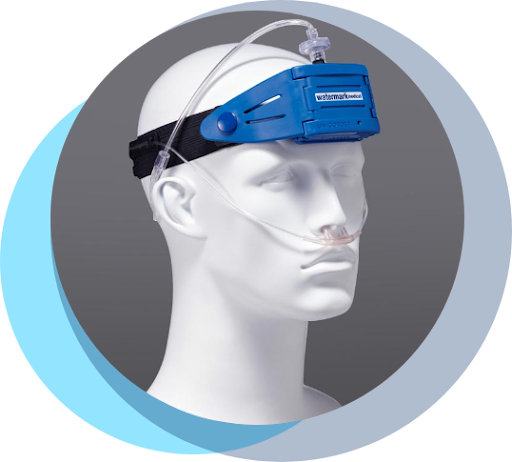
Home sleep study devices are designed to capture several signals related to breathing and the body’s response to sleep disruptions.
The device typically measures:
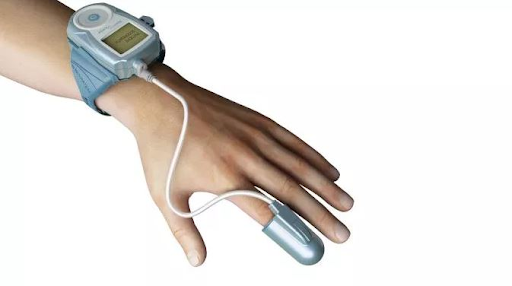
- Blood oxygen levels (oxygen saturation)
- Pulse rate and heart rate changes
- Peripheral arterial tone (changes in blood flow in the fingertip related to breathing events and respiratory effort)
- Snoring (decibel level)
- Body position
These signals allow sleep specialists to determine one of the most important measurements is the Apnea Hypopnea Index (AHI), which measures how often breathing pauses or partial obstructions occur during sleep.
The AHI categories generally include:
- Normal: fewer than 5 events per hour (snoring may be present, without clinically significant sleep apnea)
- Mild sleep apnea: 5-15 events per hour
- Moderate sleep apnea: 15-30 events per hour
- Severe sleep apnea: more than 30 events per hour
How a Home Sleep Study Works
Meet with a Sleep Medicine Provider
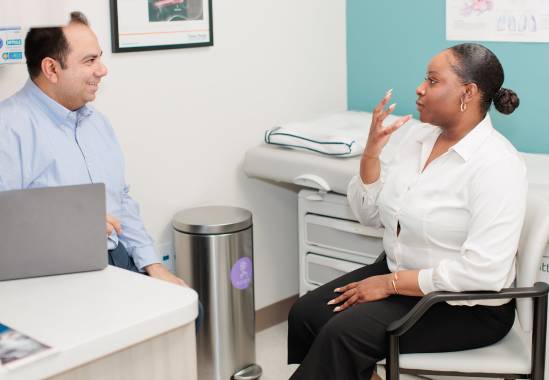
A home sleep test requires a prescription from a healthcare provider. During your visit, your physician will review your symptoms and medical history to determine whether a home sleep study is appropriate. If sleep apnea is suspected, the provider will order the test.
Receive the Equipment
You will usually pick up the testing device from our office located at:
500 W Annandale Rd, Falls Church, VA 22046
At PMA Health, our team provides clear instructions and directions on how to place the sensors and start the device before bedtime.
Perform the Test at Home
On the night of the study, you will place the sensor on your finger and wear the small recording device on your wrist. The device works quietly throughout the night, recording physiological signals while you sleep. Most patients find the device easy to wear and are able to sleep normally.
To help ensure accurate results:
- Try to follow your usual bedtime routine
- Avoid caffeine later in the day
- Avoid alcohol in the evening
- Remove any fingernail polish, acrylic nails, and try to keep fingernails short
- Take your usual nighttime medications (unless instructed otherwise)
Return the Equipment
After the test night, you will typically return the device to the office unless it is a disposable unit or if you are doing it for more than one night.
Our team will then download the data and prepare the study for physician review.
Review the Results
Once the data has been analyzed, your Sleep Medicine provider will review the results with you.
Advantages of Home Sleep Studies
Home sleep studies offer several benefits for patients. They allow testing in a familiar sleep environment, which can make it easier to sleep naturally. They are also more convenient than overnight laboratory studies and are often covered by insurance as an initial diagnostic test.
For most patients with typical symptoms of sleep apnea, a home sleep study usually provides enough information to make a diagnosis.
Limitations of Home Sleep Tests
Although home sleep tests are useful, they do have some limitations.
Home tests primarily evaluate for sleep apnea. They do not measure brain waves or sleep stages the way a laboratory
sleep study does. Because of this, home sleep studies generally cannot diagnose other sleep conditions.
In some cases, the test may also underestimate the severity of sleep apnea, because it measures events across the entire time spent in bed rather than the exact time spent asleep.
Occasionally, sensors can shift during sleep and reduce the quality of the recording.
If the results are inconclusive or if additional sleep disorders are suspected, your Sleep Medicine provider may recommend a full overnight sleep study in a sleep laboratory.
Who May Need an In-Lab Sleep Study Instead
While home testing works well for many patients, an in-lab sleep study is more appropriate for individuals with certain medical conditions.
Your provider may recommend an in-lab sleep study if you have:
- Significant lung disease
- Heart failure
- Neurologic or neuromuscular conditions
- Symptoms suggesting multiple sleep disorders
In these situations, the more detailed information obtained during an overnight polysomnogram may provide a clearer diagnosis.
Schedule a Sleep Evaluation
If you are experiencing symptoms such as snoring, excessive daytime sleepiness, morning headaches, waking up not feeling refreshed, or poor-quality sleep, a sleep evaluation may help identify the cause.
The sleep medicine specialists at PMA Health can determine whether a home sleep study or an in-lab test is the best next step.
Phone: 703-521-6662
Identifying and treating sleep apnea can significantly improve sleep quality, daytime energy, and long-term health.