What to Expect In-lab Sleep Study
What Is an In-Lab Sleep Study and What Should You Expect?
If you’ve been referred for a sleep study, it’s normal to wonder what the test involves and whether you’ll actually be able to sleep. At PMA Health, we walk patients through every step so the experience is comfortable, straightforward, and informative.
A sleep study, also called a polysomnogram, is an overnight test that helps diagnose sleep disorders such as Obstructive Sleep Apnea, Restless Legs Syndrome, Narcolepsy, and other conditions that affect sleep quality, breathing, and nighttime movements.
The purpose of the study is simple: to understand how your body functions while you sleep so your healthcare provider can determine whether a sleep disorder is present and what treatment(s) may help.
Why You May Be Recommended for a Sleep Study
Many sleep disorders develop gradually, and symptoms can be subtle at first. Your provider may recommend a sleep study if you experience:
- Loud or frequent snoring
- Waking up gasping or choking during sleep
- Excessive daytime sleepiness or fatigue
- Difficulty falling or staying asleep
- Non-restorative sleep (waking up tired)
- Morning headaches
- Unusual movements or behaviors during sleep
While sleep questionnaires and symptom reports are helpful, they cannot measure what is happening in the body during sleep. A sleep study provides objective data that allows a sleep specialist to make an accurate diagnosis.
What a Sleep Study Measures
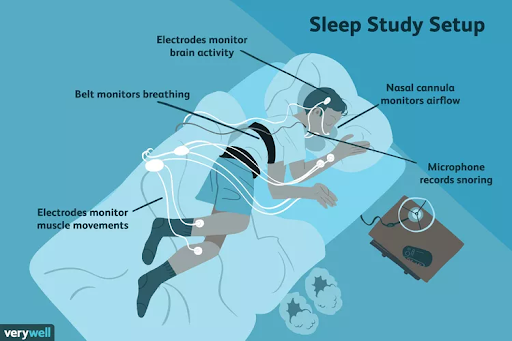
During the study, small sensors are placed on your body to monitor different aspects of sleep. These sensors are painless and designed to be as comfortable as possible.
A sleep study typically measures:
- Brain activity to determine sleep stages
- Breathing patterns and airflow
- Blood oxygen levels
- Heart rate and rhythm
- Muscle tone and leg movements
- Snoring and body position
Together, these measurements help determine whether breathing disturbances, limb movements, or other sleep disruptions are occurring during the night.
Where Sleep Studies Are Performed
Most sleep studies are performed overnight in a sleep center designed to feel similar to a comfortable bedroom rather than a hospital room.
Sleep rooms often include:
- A standard bed and bedding
- A private bathroom
- Television or reading space
- A quiet, controlled environment for sleep
At PMA Health, sleep studies are performed at the American Academy of Sleep Medicine (AASM) accredited sleep lab at VHC Health, and are interpreted by physicians trained in Sleep Medicine, who carefully review the data and explain the results in clear terms.
Location:
VHC, 1 North; 1635 N. George Mason Dr. Arlington, VA 22205
Phone: 703-236-7171
Fax: 703-236-7172
How to Prepare for Your Sleep Study
Preparing for a sleep study is simple. On the day of the test, try to follow your usual routine. Helpful guidelines include:
- Avoid caffeine after lunchtime
- Do not nap during the day
- Avoid alcohol in the evening
- Wash your hair and avoid hair gels or styling products
- Take medications as directed by your physician
- Remove nail polish or acrylic nails
- Have dinner prior to arriving for the sleep study
These steps help ensure the results reflect your normal sleep as closely as possible.
What to Bring
Plan to bring items you would normally bring for an overnight stay. Bringing familiar items can help make the sleep environment feel more comfortable.
These may include:
- Comfortable sleepwear
- Toiletries
- Your usual nighttime medications (unless otherwise instructed)
- A phone charger
- A book or something relaxing from your normal bedtime routine
- Clothes to wear home the next morning
- Preferred pillows and/or blanket
What Happens the Night of Your Sleep Study
Sleep studies typically begin in the evening and end the next morning.
Typical schedule:
Check-in: arrive at the hospital by 8:15 PM and register in the main lobby (by the Starbucks coffee)
Lights out: near your usual bedtime
Wake-up: around 5:30-6:00 AM
After you arrive, a sleep technician will guide you to your room and review the process. Sensors will be gently placed on your scalp, face, chest, and legs. These sensors connect to monitoring equipment that records information throughout the night. Technicians observe the data from another room and can communicate with you if needed. If you need to get up during the night, they will help disconnect and reconnect the equipment. Although the setup may look complex, most patients are able to sleep well during the study.